Your air ducts move heated and cooled air through every room of your home, and they do it quietly enough that most people never think about them. But dust, pet hair, moisture, and debris slowly collect inside the ductwork and when buildup gets bad enough, you start to notice it.
Here’s the honest part most cleaning companies won’t tell you: not every home needs its ducts cleaned, and definitely not every year. The U.S. Environmental Protection Agency takes a measured “clean only when needed” position, and that’s the approach this guide follows too. Routine, scheduled cleaning for a healthy home isn’t backed by strong evidence but when specific warning signs appear, professional cleaning genuinely helps.
So the real question isn’t “should I clean my ducts?” It’s “does my home show the signs that justify it?” Below are the seven that matter, in plain terms.
Quick Answer
The clearest signs you need professional air duct cleaning are visible mold around vents, signs of rodents or insects in your ductwork, and excessive dust or debris being blown out of your registers. These are the three conditions the U.S. EPA specifically recommends acting on. Other warning signs include persistent musty odors, weak or uneven airflow, and a dusty home after recent renovation work.
The 7 Signs at a Glance
| # | Sign | What it usually points to | What to do |
| 1 | Dust returns fast after cleaning | Buildup recirculating from ducts | Inspect ducts + check filter |
| 2 | Visible dust/debris at vents | Debris in registers or ductwork | Professional inspection |
| 3 | Musty or stale smell when HVAC runs | Trapped moisture, mold, or debris | Find moisture source, then clean |
| 4 | Weak or uneven airflow | Filter, leaks, or blockage | Check filter first, then inspect |
| 5 | Visible mold near vents | Moisture problem + contamination | Fix moisture, then clean/remediate |
| 6 | Signs of pests in ducts | Rodent/insect infestation | Pest control first, then clean |
| 7 | Recent renovation or construction | Fine construction dust in system | Post-reno duct cleaning |
1. Your Home Gets Dusty Again Right After You Clean
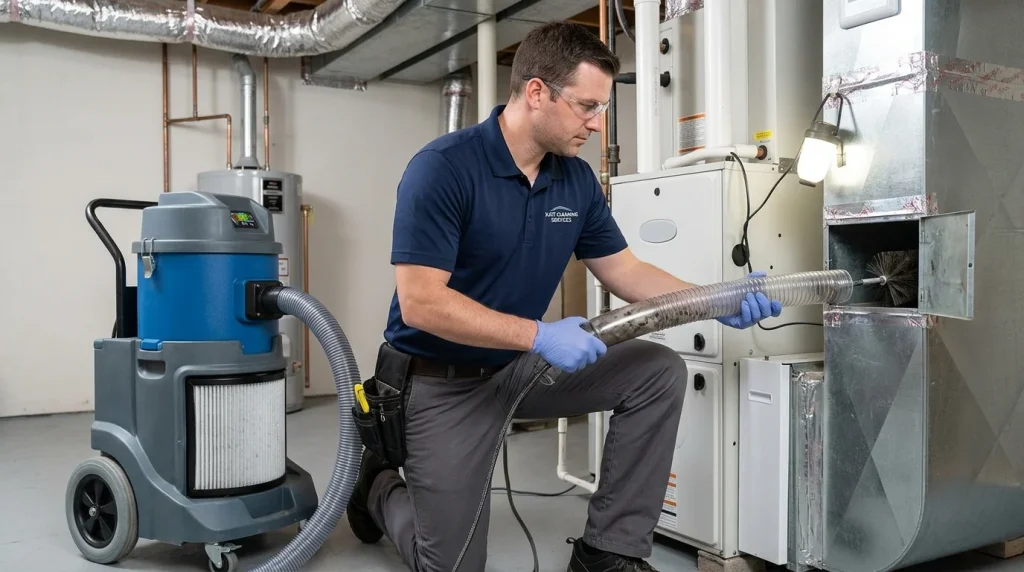
A thin layer of dust over a week is normal. But if you wipe down surfaces on Saturday and everything’s coated again by Monday, your ductwork may be recirculating it.
When heavy debris sits inside the duct system, every time the heating or cooling kicks on, some of it gets pushed back into your living space. You’ll often see it gather first on the surfaces nearest your vents:
- Vent covers and ceiling registers
- Furniture and electronics close to airflow
- Window sills and shelves in bedrooms
One thing to keep in mind: the EPA points out that dust on furniture has many possible sources outdoor air, cooking, foot traffic, and poor filtration all contribute, not just ducts. So before booking a cleaning, swap your air filter and see if it helps. If dust still returns abnormally fast, that’s your cue to get the ducts inspected.
2. You Can See Dust or Debris Around the Vents
This is the easiest sign to verify yourself. Pull off a vent cover and look inside the first few inches. Dark streaking around the grille, visible lint or debris, or a puff of dust when the system first starts all suggest buildup deeper in the system.
Watch for:
- Gray or black marks fanning out from the vent
- Loose debris visible just inside the opening
- A visible dust cloud the moment the HVAC turns on
Important distinction: dust on the cover is just surface grime you can wipe off. Dust being released into the room from the register is one of the exact conditions the EPA flags as worth professional cleaning. A technician can tell you which one you’re dealing with don’t assume the worst until it’s been looked at.
3. A Musty or Stale Smell When the System Runs
Odor is one of the most reliable signals, because your nose catches contamination before your eyes do. If a musty, damp, or stale smell rolls out of the vents especially in the first minutes after the system has been off moisture, mold, or trapped organic debris is the likely cause.
Typical odor culprits include:
- Damp, musty smell after the AC runs (moisture/mold)
- Lingering pet or smoke odor (debris holding the smell)
- A dusty, “attic” smell on startup
Here’s the catch: if the smell is moisture-driven, cleaning alone is a temporary fix. The EPA is clear that if you don’t correct the underlying cause, mold and odor come straight back. So the right sequence is find and fix the moisture source first, then clean. Any company that skips that step is selling you a repeat visit.
4. Airflow Is Weak or Uneven Between Rooms
When one room is comfortable and the next stays stubbornly hot or cold, airflow is the issue though dirty ducts are only one possible reason.
Signs worth noting:
- Noticeably weak air coming from one or more vents
- Rooms that never reach the thermostat setting
- The system running far longer than it used to
Before you blame the ducts, rule out the cheap stuff first: a clogged filter, closed dampers, or furniture blocking a return vent cause most airflow complaints. Replace the filter and clear the vents. If the imbalance survives that, it’s worth a professional inspection to check for buildup, duct leaks, or a blockage. Notably, the EPA observes that cleaning components like coils and fans can improve efficiency, while cleaning the ducts alone rarely does much for performance so airflow issues often point to the wider HVAC system, not just the duct walls.
5. Visible Mold In or Around the Vents
This is the most serious sign on the list, and it’s the first condition the EPA explicitly says warrants cleaning. Mold needs moisture, so if you see it, there’s a water problem feeding it somewhere.
Look for dark, fuzzy, or discolored patches on:
- Vent covers and registers
- The duct opening itself
- AC coils, drip pans, and nearby walls or ceilings
A musty smell usually rides along with it. Don’t wipe it and move on if mold is growing on porous insulated ductwork, the insulation often has to be removed and replaced, not just cleaned. And once again: unless the moisture source is corrected, it regrows. Treat visible mold as a “call a professional for inspection” situation, not a DIY one. Mold testing or HVAC repair may be part of the real fix.
6. Signs of Pests in the Ductwork
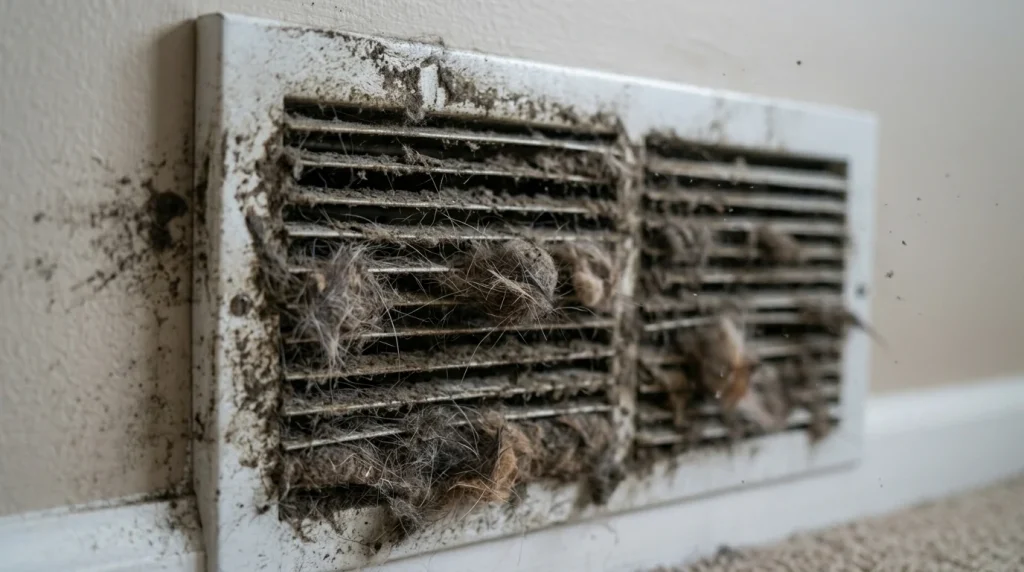
Rodents and insects sometimes get into ducts, attics, and crawl spaces and pest infestation is the EPA’s second named reason to clean. Once they’re in, they leave droppings, nesting material, and odor behind, all circulating through air you breathe.
Warning signs:
- Scratching or scurrying sounds inside the walls or vents
- Droppings or nesting debris near registers
- A foul, persistent smell that cleaning doesn’t fix
- Debris suddenly blowing from vents
The correct order matters here: pest control first, duct cleaning second. There’s no point sanitizing ducts while the infestation is active. Once the animals are gone, professional cleaning removes the biological contamination they left which is exactly the kind of thing you don’t want recirculating, especially in a home with kids, elderly residents, or anyone with allergies.
7. You’ve Just Finished a Renovation or Construction Project
Remodeling is a dust factory. Drywall sanding, flooring removal, plaster, and demolition throw out incredibly fine particles and if your HVAC ran during the work (or even just sat with vents uncovered), a lot of that settles inside the ductwork.
Post-renovation cleaning makes sense if:
- Walls were cut, sanded, or rebuilt
- Flooring was torn up and replaced
- Painting or plastering kicked up heavy dust
- The system ran while work was happening
- Fine dust keeps reappearing weeks after the job ended
Construction dust is fine enough to stay airborne and spread fast, and it’s a common reason homes feel gritty long after the contractors leave. This is one of the few situations where cleaning soon after rather than waiting for “signs” is genuinely worthwhile.
What the EPA Actually Recommends
Because this is health-adjacent, it’s worth being straight about the science. The EPA’s official guidance says that duct cleaning has not been conclusively shown to prevent health problems, and there’s no strong evidence that dust levels in a home reliably go down after cleaning.
That sounds skeptical, but the EPA is not saying cleaning is a scam. It explicitly recommends professional cleaning when any of these three conditions exist:
- Substantial visible mold inside hard-surface ducts or on HVAC components.
- Vermin infestation rodents or insects living in the ductwork.
- Excessive dust and debris that’s clogging ducts or being actively released into rooms.
The key insight the EPA adds: if any of these are present, there’s usually an underlying cause (a moisture leak, a gap letting pests in, a failing filter). Fix that cause first, or the problem returns no matter how well the ducts are cleaned.
How Often Should Air Ducts Be Cleaned?
There’s no universal schedule, which is exactly why the “every year!” sales pitch is a red flag. As a general benchmark, the National Air Duct Cleaners Association (NADCA) suggests every 3 to 5 years for a typical home but your situation shifts that:
- Sooner if you have pets that shed, smokers in the house, recent renovation, ongoing allergies, or a humid/dusty climate.
- Later for a sealed, low-traffic home with good filtration and no warning signs.
Far more important than the calendar is changing your HVAC filter on schedule (every 1–3 months for most homes). A clogged filter is the single biggest driver of dust problems people mistake for dirty ducts.
What Does Professional Air Duct Cleaning Cost?
Pricing varies by region, home size, number of vents, and system condition, but as a rough guide, most full residential cleanings fall in the $300–$700 range, with larger homes or heavy mold/pest remediation running higher.
Be cautious of any ad quoting “$59 whole-house duct cleaning” that’s the classic “blow and go” scam. The lowball price gets a technician in the door, then the quote balloons with “necessary” add-ons, or they run a shop-vac for ten minutes and leave. A legitimate, thorough job for an average home simply costs more.
DIY vs. Professional: What You Can and Can’t Do Yourself
You can absolutely handle the surface-level maintenance yourself and you should:
- Vacuum and wipe vent covers and registers
- Replace HVAC filters on schedule
- Keep furniture from blocking returns
What you can’t do is clean the actual duct system. A household vacuum reaches a few inches into the vent at best. Proper cleaning uses equipment built for the job: high-powered, HEPA-filtered negative-air vacuums, rotary brushes and air whips to dislodge buildup, and compressed-air tools to push debris toward collection.
Just as valuable as the equipment: a real professional will inspect first and tell you honestly whether cleaning is even needed which saves you money when it isn’t.
How to Choose a Company (and Avoid Getting Scammed)
This niche has more than its share of bad operators, so vet before you book:
- Hire NADCA-certified technicians. It’s the industry standard and a baseline trust signal.
- Insist on inspection first. Photos or video of your actual ducts, before and after, separate honest companies from “blow and go” outfits.
- Match the EPA’s standard of work. A proper service protects your home’s surfaces, uses vacuum equipment that exhausts outdoors or through HEPA filtration, and removes debris without releasing it into your living space.
- Be skeptical of ultra-cheap coupons and high-pressure upsells for “sanitizers” or “ozone treatments” you didn’t ask about.
The Real Benefits When Cleaning Is Actually Warranted

When your ducts genuinely meet one of the conditions above, professional cleaning can deliver:
- Removal of mold, pest debris, and biological contaminants from accessible ductwork
- Less dust being recirculated into rooms
- Reduced musty or stale odors at the source
- A cleaner system after renovation dust
- Some efficiency gains when coils and components are cleaned alongside the ducts
The honest framing: cleaning is most valuable as a targeted fix for a real problem, not a routine ritual. Done at the right time, it’s worth it. Done on a sales-driven schedule, it’s mostly wasted money.
When to Call a Professional in [City]
If you’re seeing more than one of these signs say, a dusty home, dirty-looking vents, and a musty smell on startup it’s time for a professional inspection rather than guesswork.
A qualified technician can confirm whether your ducts actually need cleaning, identify any underlying issue (moisture, pests, a blockage, or a failing component), and document the condition before any work begins.
Conclusion
In conclusion, 7 Signs Your Air Ducts Need Professional Cleaning can help you spot problems early before they affect your indoor air quality. If you notice dust buildup, bad smells, weak airflow, or allergy issues, it may be time to call a professional air duct cleaning service. Regular cleaning keeps your home healthier and your HVAC system working better.
FAQs About Air Duct Cleaning
How do I know if my air ducts need cleaning?
Look for visible mold around vents, signs of pests in the ductwork, or excessive dust being blown from registers the three conditions the EPA flags. Persistent musty odors, weak airflow, and a dusty home after renovation are additional warning signs.
Is air duct cleaning necessary for every home?
No. The EPA does not recommend routine cleaning for every home. It’s warranted when there’s clear evidence of mold, pests, or heavy debris not on a fixed annual schedule.
How often should air ducts be cleaned?
NADCA suggests roughly every 3 to 5 years for a typical home, but pets, smoking, allergies, humidity, and renovation can call for it sooner. Regular filter changes matter more than the calendar.
How much does professional air duct cleaning cost?
Most residential cleanings run about $300–$700 depending on home size, number of vents, and condition. Beware “$59 whole-house” ads they’re a common bait-and-switch tactic.
Can dirty air ducts make my house dusty?
They can contribute, especially with heavy buildup releasing particles from registers. But the EPA notes dust also comes from cooking, foot traffic, pets, and poor filtration ducts are only one source.
Can air duct cleaning remove bad smells?
It can remove odors from debris, pests, or buildup. If the smell is from moisture or mold, the source must be fixed too, or the odor returns.
Should I clean my air ducts myself?
You can clean vent covers and replace filters yourself, but the duct system itself needs professional equipment a home vacuum only reaches a few inches in.
How long does professional air duct cleaning take?
Typically 2 to 4 hours for an average home, longer for large homes or heavy mold/pest contamination. A company can give a firm estimate after inspecting your system.